Views: 0 Author: Site Editor Publish Time: 2026-03-25 Origin: Site
As video technology evolves, choosing the right video transmission protocol has become more crucial than ever. Are you confused about whether to use HDMI, SDI, or NDI for your setup? In this comprehensive guide, we will dive into the strengths and limitations of each protocol. By the end, you'll have the knowledge to make an informed decision on which one suits your specific needs.
When choosing the right video transmission protocol for your setup, understanding the core differences between HDMI, SDI, and NDI is essential. Each protocol serves different purposes and has its own set of advantages and limitations that make it more suitable for specific applications.
HDMI is one of the most commonly used video transmission protocols, especially in consumer electronics and small-scale professional environments. It is designed to transmit high-definition video and multi-channel audio over a single cable, offering a simple solution for many video applications.
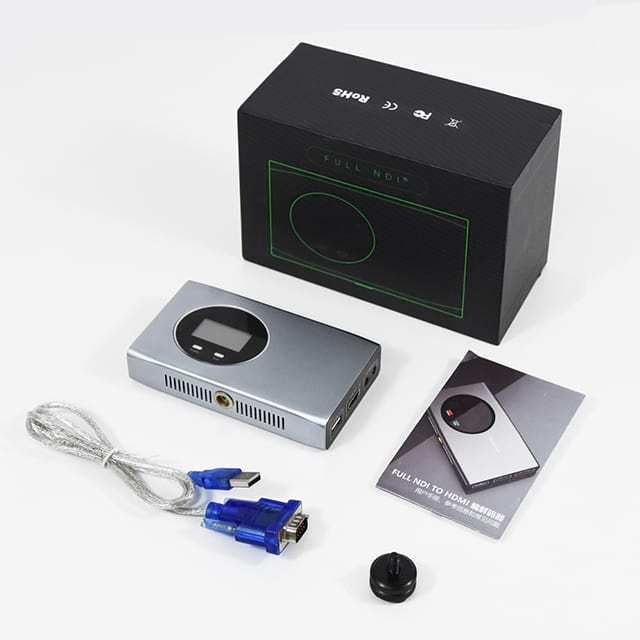
Key Features:
● Widespread Use: HDMI is found in nearly every consumer device, from televisions and gaming consoles to laptops and personal computers. It's also used in smaller professional video setups such as conference rooms or home studios.
● High-Quality Video and Audio: HDMI supports uncompressed digital video and audio signals. With HDMI 2.1, it can deliver resolutions up to 8K, making it suitable for everything from home entertainment systems to semi-professional video production.
● Ease of Use: Its plug-and-play functionality makes HDMI incredibly user-friendly. Setup requires minimal technical knowledge, making it accessible for home users and small studios.
Limitations:
● Limited Transmission Distance: HDMI is effective over short distances. Typically, it can transmit 1080p video up to 50 feet, with shorter ranges for 4K. This makes HDMI unsuitable for large venues or setups requiring long cable runs.
● Lack of Locking Mechanism: HDMI cables do not have locking connectors, which means they can be easily disconnected, especially in dynamic environments like live events.
● Not Ideal for High-End Broadcast: While HDMI works well for consumer-grade setups, it doesn’t offer the stability or reliability needed for professional broadcast production, especially in larger or more complex environments.
SDI is a professional-grade protocol primarily used in broadcast environments. It is designed for transmitting uncompressed digital video signals over long distances, making it a staple for high-end production and live events.
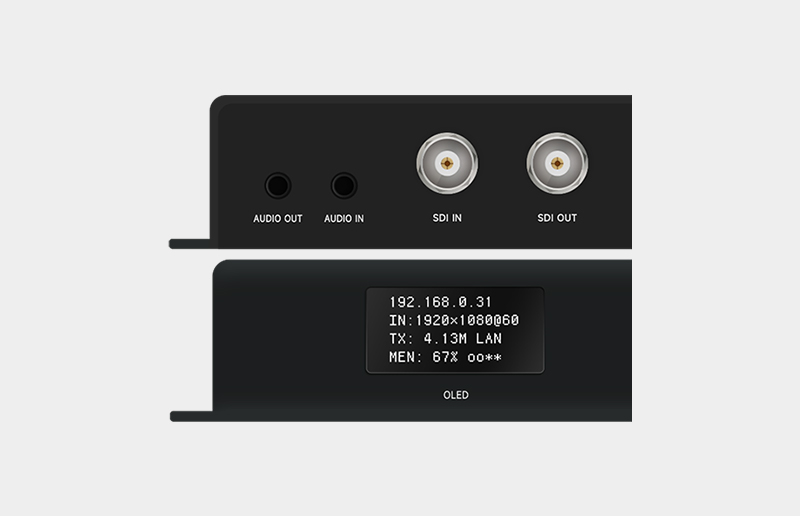
Key Features:
● Long-Distance Transmission: SDI can transmit video signals over long distances—up to 300 feet for SD-SDI and over 100 meters for HD-SDI—without degradation, making it ideal for large-scale productions where reliability is critical.
● Uncompressed Video: Unlike HDMI, SDI transmits uncompressed video, which preserves the quality of the signal, essential for professional-grade video production.
● Robust and Secure: The BNC connectors used in SDI systems provide a twist-lock mechanism, ensuring secure connections. This is vital in professional broadcasting, where a loose cable could result in significant disruptions.
Limitations:
● Higher Cost: SDI equipment, including cables, cameras, and switchers, is generally more expensive than HDMI. This makes SDI a better choice for professional setups with higher budgets but not ideal for smaller, budget-conscious projects.
● Limited Flexibility: SDI systems require direct, physical connections between devices, which makes them less flexible than IP-based systems like NDI. This can limit scalability and complicate setup in larger environments.
NDI is a network-based video protocol developed by NewTek, which has gained significant traction in the world of IP-based video production. It allows video, audio, and metadata to be transmitted over standard Ethernet networks, providing a high level of flexibility and scalability for large-scale production environments.
Key Features:
● Network-Based Flexibility: NDI operates over existing Ethernet infrastructure, eliminating the need for dedicated coaxial cables. This significantly reduces setup complexity and costs, particularly for multi-camera productions and large-scale setups.
● Low-Latency Video: NDI supports uncompressed video with ultra-low latency, making it suitable for real-time streaming and live production environments where timing is critical.
● Scalability: NDI's software-based routing allows it to scale easily across networks. Multiple devices can access and discover NDI streams, which is especially advantageous for large production setups or remote video production workflows.
Limitations:
● Network Dependency: NDI performance is dependent on the quality and bandwidth of the network. In environments with heavy data traffic or suboptimal network infrastructure, NDI may suffer from dropped frames or increased latency.
● Complex Setup: Implementing an NDI-based system requires a reliable network with sufficient bandwidth. Network management and configuration are crucial, especially for large-scale deployments, making it more complex to set up than HDMI or SDI.
Understanding the key differences between HDMI, SDI, and NDI is critical when selecting the right protocol for video production. Each protocol has its unique strengths, depending on the type of production, the environment, and the technical requirements.
One of the primary distinctions between HDMI, SDI, and NDI is how the video signal is transmitted—either through a cable or over a network.
Protocol | Transmission Method | Key Characteristics |
HDMI | Cable (HDMI Cable) | Short-distance transmission; typically used for consumer electronics like TVs, gaming consoles, and home theaters. |
SDI | Cable (Coaxial Cable) | Long-distance, stable transmission; designed for professional video environments like broadcasting. |
NDI | Network (IP Network) | Video transmitted over standard Ethernet networks, providing flexibility and scalability in larger production environments. |
Another crucial aspect to consider is how each protocol supports different video resolutions and handles latency. The ability to transmit high-definition and ultra-high-definition content with low latency can be the deciding factor in choosing between HDMI, SDI, or NDI.
● HDMI:
○ Resolution: Supports resolutions up to 8K (depending on the version, e.g., HDMI 2.1).
○ Latency: Very low latency, suitable for most consumer-level applications like gaming or media streaming. However, signal degradation may occur at longer cable lengths (especially for 4K content), limiting its use in larger professional settings.
○ Application: Best for small-scale setups, including home theaters, personal devices, and consumer cameras.
● SDI:
○ Resolution: Supports high-definition video, ranging from standard definition to 8K (with standards like 12G-SDI and 24G-SDI). It is the go-to protocol for high-resolution broadcasting and live production, including 4K and 8K video.
○ Latency: SDI offers minimal latency, making it suitable for professional broadcast applications that require real-time video transmission without delays.
○ Application: Primarily used in broadcast studios, live events, and other professional environments where maintaining high-quality, stable, uncompressed video is crucial.
● NDI:
○ Resolution: Capable of transmitting high-definition video up to 4K. Full NDI supports uncompressed video, while NDI HX offers compressed video, making it more adaptable to various bandwidths.
○ Latency: NDI’s latency is generally low, but it can increase depending on the quality and bandwidth of the network. It is an excellent solution for real-time streaming but might suffer in less optimal network conditions.
○ Application: Ideal for large-scale video production with multiple cameras and remote collaboration, especially when using IP networks to connect devices.
While all three protocols offer excellent video transmission capabilities, their cost structures and flexibility differ significantly, depending on the scale and needs of the production.
● HDMI:
○ Cost: HDMI equipment is generally low-cost, making it the ideal choice for budget-conscious consumers and small-scale video production setups.
○ Flexibility: HDMI is less flexible in terms of scalability, as it requires direct, physical connections. However, it is perfect for straightforward, short-range setups and is widely compatible with consumer devices.
○ Limitations: While it’s easy to set up and inexpensive, HDMI is not ideal for large-scale, professional setups where distance and signal stability are essential.
● SDI:
○ Cost: SDI equipment tends to be more expensive, particularly professional-grade cameras, switchers, and routers. The need for specialized coaxial cables and hardware further increases the cost.
○ Flexibility: While SDI is reliable, it is less flexible than NDI because each device requires a dedicated connection. It’s not as adaptable for large or rapidly changing setups.
○ Limitations: The relatively high cost and rigid infrastructure make SDI better suited for large, professional productions where high-quality video and long cable runs are necessary.
● NDI:
○ Cost: NDI has a moderate initial setup cost, primarily due to the need for network infrastructure. However, the ability to use existing Ethernet cables and network infrastructure can lower overall deployment costs.
○ Flexibility: NDI offers the greatest flexibility, as it allows video signals to be routed over a network with minimal physical limitations. It’s ideal for large-scale productions where multiple devices need to connect easily.
○ Limitations: NDI’s performance relies heavily on network stability and bandwidth. The network must be able to handle high data rates, especially for high-definition video feeds.
Choosing the right video transmission protocol—whether HDMI, SDI, or NDI—depends on the specific requirements of your setup. Understanding the unique strengths of each protocol will help you make an informed decision based on factors like budget, application type, and technical environment.
For home setups or small-scale production environments, HDMI is often the best choice. It is ideal for budget-conscious users who need a simple and reliable solution for short-distance video transmission.
● Recommended Protocol: HDMI
○ Cost-Effective: HDMI offers a low-cost solution without sacrificing video quality. For individuals or small studios working with consumer-grade cameras, streaming devices, or personal computers, HDMI provides an affordable entry point.
○ Ease of Use: The plug-and-play nature of HDMI makes it incredibly easy to set up. No additional configuration is required, making it ideal for users with minimal technical knowledge.
○ Short-Distance Transmission: HDMI is perfect for setups where devices are placed close together, such as connecting a laptop to a projector or a gaming console to a TV. Its typical range is sufficient for home environments, where long cable runs are unnecessary.
○ Ideal Use Cases: Home streaming setups, personal video production, gaming, and conference presentations.
When it comes to large-scale professional broadcasting, SDI stands out for its durability, reliability, and ability to transmit uncompressed video over long distances. It’s the standard in environments where high-quality, stable signal transmission is critical.
● Recommended Protocol: SDI
○ Long-Distance, Reliable Transmission: SDI excels at transmitting high-quality, uncompressed video signals over long distances, with the ability to extend up to 300 feet or more without degradation. This makes it an indispensable protocol for broadcast studios and live event setups.
○ Built-in Security: SDI’s locking BNC connectors ensure a secure connection, preventing accidental disconnections, which is a common concern in fast-paced live production environments.
○ High-Fidelity Video: SDI is known for its excellent video quality, making it the ideal choice for professional productions, such as sports broadcasting or concerts, where maintaining high video resolution and synchronization is paramount.
○ Ideal Use Cases: Sports events, large-scale live concerts, TV studios, and other professional production environments.
For productions that require flexibility, scalability, and remote operation, NDI is the most suitable protocol. It leverages standard IP networks to transport video and audio, allowing for highly efficient remote video production setups.
● Recommended Protocol: NDI
○ Network-Based Flexibility: NDI’s biggest strength lies in its ability to use existing Ethernet networks for video transmission. This is perfect for remote production environments or multi-camera setups, where multiple video signals need to be routed dynamically across a network.
○ Scalability: With NDI, it is easy to add devices to the network without running extra cables. This scalability is invaluable for large live productions, where several cameras or video sources need to be connected and accessed simultaneously.
○ Low Latency: NDI supports low-latency video transmission, making it an excellent choice for live streaming and remote production, especially when maintaining real-time control over the video feed is critical.
○ Ideal Use Cases: Remote video production, multi-camera live streaming, virtual events, and environments with pre-existing IP infrastructure.
In this guide, we’ve explored the key differences between HDMI, SDI, and NDI protocols, highlighting their suitability for various applications. Choosing the right protocol depends on your specific needs, such as budget, transmission distance, and flexibility. For those seeking professional-grade solutions, ORIVISION Electronics Co., Ltd. offers products like the NH1000 and ES931, which provide reliable, high-quality performance tailored to modern video production needs, ensuring seamless integration across various protocols.
A: HDMI, SDI, and NDI are video transmission protocols. HDMI is suitable for short-distance consumer setups, SDI excels in long-distance, professional broadcasts, and NDI is ideal for network-based, scalable video production.
A: SDI is generally the best choice for professional broadcast environments due to its reliability, long-distance transmission, and minimal latency, making it perfect for live productions.
A: Yes, NDI is ideal for large-scale video production, especially when flexibility, network scalability, and low latency are required across multiple devices and cameras.
A: HDMI can support high-definition video, but it is best for consumer-grade setups or small production environments due to its limited transmission range and lack of secure connection features.


