
Views: 0 Author: Site Editor Publish Time: 2025-12-03 Origin: Site


In the realm of digital video transmission, the choice between hardware and software HDMI encoders is pivotal. These devices play a crucial role in converting video signals into a format suitable for streaming over the internet. As the demand for high-quality video content grows, understanding the differences between hardware and software HDMI encoders becomes essential for broadcasters, educators, and anyone involved in live streaming. For those looking to explore more about HDMI Encoders, this article provides a comprehensive analysis of their key differences, advantages, and applications.
HDMI encoders are devices that convert HDMI video signals into a digital format suitable for streaming. They are integral to live streaming setups, allowing video content to be transmitted over IP networks. The two main types of HDMI encoders are hardware and software encoders. Each has its unique characteristics, benefits, and drawbacks, making the choice between them dependent on specific needs and constraints.
Hardware HDMI encoders are dedicated devices designed specifically for encoding video signals. They are known for their reliability and efficiency, often favored in professional settings where stability and performance are paramount. These encoders typically offer lower latency and higher quality output compared to their software counterparts. They are ideal for live stream encoder hardware applications, where consistent performance is crucial.
Software HDMI encoders, on the other hand, are applications that run on general-purpose computers. They offer flexibility and are often more cost-effective than hardware solutions. Software encoders are suitable for environments where budget constraints are a concern, and the encoding process does not require the utmost in real-time performance. They are commonly used in scenarios where the encoding task can be offloaded to existing computer systems, making them a versatile choice for many users.
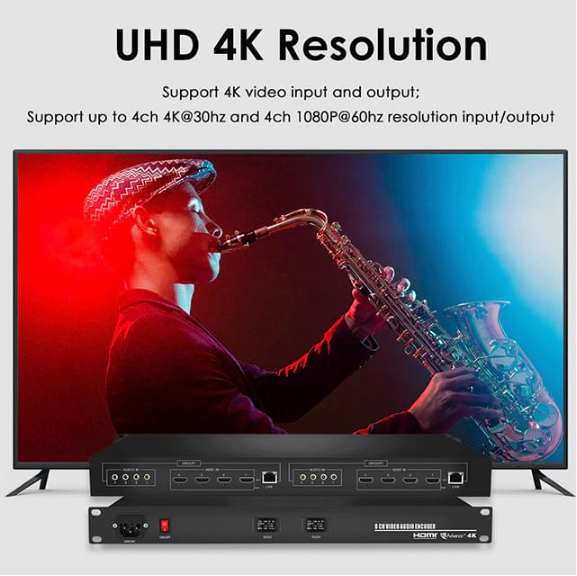
The primary differences between hardware and software HDMI encoders lie in their performance, cost, and application suitability. Hardware encoders typically offer superior performance, with lower latency and higher reliability. They are often used in professional broadcasting, live events, and other high-stakes environments. In contrast, software encoders provide greater flexibility and are generally more affordable, making them suitable for smaller-scale operations or environments where budget is a primary concern.
Performance is a critical factor when choosing between hardware and software encoders. Hardware encoders are designed to handle video encoding with minimal delay, making them ideal for live broadcasts where latency must be minimized. Software encoders, while improving in recent years, often introduce more latency due to the processing power required from the host computer. This makes them less suitable for real-time applications but perfectly adequate for recorded content or situations where a slight delay is acceptable.
Cost is another significant consideration. Hardware encoders are generally more expensive due to their specialized nature and the dedicated components required for optimal performance. Software encoders, being applications, are less costly, as they utilize existing computer hardware. This cost difference can be a deciding factor for many users, especially those operating within tight budget constraints.
Flexibility and scalability are where software encoders shine. They can be easily updated and scaled according to the needs of the user. This makes them ideal for environments where requirements change frequently, or where the ability to quickly adapt to new formats and standards is necessary. Hardware encoders, while reliable, are less flexible, as they are limited by their physical design and the capabilities of their firmware.
HDMI encoders are used in a wide range of applications, from broadcasting and live streaming to surveillance and education. Their ability to convert video signals for transmission over IP networks makes them invaluable in modern digital communication. Understanding the specific needs of each application is crucial in selecting the right type of encoder.
In broadcasting and live streaming, the choice of encoder can significantly impact the quality and reliability of the transmission. Hardware encoders are often preferred for their stability and low latency, making them ideal for live events and professional broadcasts. Software encoders, while more flexible, may not always meet the stringent requirements of high-quality live streaming.
For surveillance and security applications, HDMI encoders are used to transmit video feeds over networks for remote monitoring. Hardware encoders are typically favored in these scenarios due to their reliability and ability to operate continuously without interruption. The need for real-time video feeds makes low latency a critical factor, further supporting the use of hardware solutions.
In educational and corporate environments, the flexibility and cost-effectiveness of software encoders make them an attractive option. They can be used for recording lectures, streaming corporate events, and facilitating remote learning. The ability to easily integrate with existing computer systems and adapt to various formats is a significant advantage in these settings.
Choosing between hardware and software HDMI encoders depends largely on the specific requirements of the application. Hardware encoders offer superior performance and reliability, making them ideal for professional and high-stakes environments. Software encoders provide flexibility and cost savings, suitable for less demanding applications. For those seeking to explore more about hdmi encoder streaming, understanding these differences is crucial in making an informed decision.
1. What are HDMI encoders used for?
HDMI encoders are used to convert HDMI video signals into a digital format suitable for streaming over IP networks. They are essential in broadcasting, live streaming, surveillance, and educational applications.
2. How do hardware HDMI encoders differ from software encoders?
Hardware HDMI encoders are dedicated devices offering high performance and low latency, while software encoders are applications that provide flexibility and cost-effectiveness but may introduce more latency.
3. Why are hardware encoders preferred for live streaming?
Hardware encoders are preferred for live streaming due to their reliability, low latency, and ability to deliver high-quality video consistently, which is crucial for live broadcasts.
4. Can software encoders be used for professional broadcasting?
While software encoders can be used for professional broadcasting, they may not always meet the stringent requirements of high-quality live streaming due to potential latency and performance issues.
5. What factors should be considered when choosing an HDMI encoder?
Factors to consider include performance, cost, application requirements, latency, and the need for flexibility or scalability.
6. Are there any cost advantages to using software encoders?
Yes, software encoders are generally more cost-effective as they utilize existing computer hardware, making them a budget-friendly option for many users.
7. What role do HDMI encoders play in educational settings?
In educational settings, HDMI encoders facilitate the recording and streaming of lectures, enabling remote learning and easy integration with existing systems.


