Views: 0 Author: Site Editor Publish Time: 2025-12-10 Origin: Site
In the rapidly evolving landscape of digital media, HDMI encoders have emerged as a pivotal technology for professional live streaming. These devices play a crucial role in converting video signals into a format suitable for streaming over the internet, thus enabling seamless live broadcasts. The importance of choosing the right HDMI encoder cannot be overstated, as it directly impacts the quality and reliability of the stream. This article delves into the top HDMI encoders available for professional live streaming, examining their features, benefits, and applications. For those seeking to understand the intricacies of HDMI Encoders, this guide offers a comprehensive overview.
Hardware = Stability: Hardware encoders decouple the streaming process from PC overhead, offering a "dedicated lane" for transmission.
Protocol Matters: RTMP is legacy; modern hardware evaluation must prioritize SRT, H.265 (HEVC), and NDI capabilities for future-proofing.
The "Fake 60fps" Trap: Many budget HDMI encoders accept 60fps input but only output 30fps—a critical spec to verify for sports or gaming.
Connectivity Trends: The market is shifting toward "Bonded Cellular" (aggregating 4G/5G/Wi-Fi) and "All-in-One" devices (encoder + switcher + monitor).
Several HDMI encoders stand out in the market due to their exceptional performance and reliability. One such product is the ORIVISION HDMI Encoder, known for its robust features and versatility. This encoder supports a wide range of streaming protocols, including NDI, SRT, and RTMP, making it suitable for various applications. Its high-definition video support ensures that the stream maintains clarity and detail, even in demanding environments.
Another notable encoder is the Teradek VidiU Pro, which offers a user-friendly interface and reliable performance. It is particularly popular among content creators and broadcasters who require a portable solution for on-the-go streaming. The VidiU Pro's ability to stream directly to multiple platforms simultaneously makes it a favorite choice for live events and remote broadcasts.
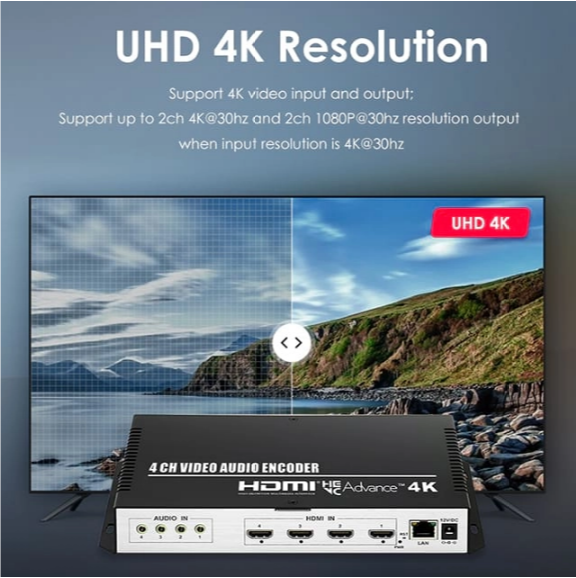
HDMI encoders are utilized across various industries, each benefiting from the technology's ability to deliver high-quality video content. In the education sector, encoders facilitate live streaming of lectures and seminars, enabling remote learning and expanding access to educational resources. Similarly, in the healthcare industry, they are used for telemedicine and live surgery broadcasts, allowing medical professionals to collaborate and share knowledge in real-time.
In the corporate world, HDMI encoders are integral to video conferencing and live corporate events. They ensure that meetings and presentations are streamed smoothly, maintaining professional standards and enhancing communication. Additionally, encoders are essential in the entertainment industry, where they support live streaming of concerts, sports events, and other live performances.
While HDMI encoders offer numerous benefits, there are challenges and considerations to keep in mind. One of the primary concerns is the compatibility of the encoder with existing infrastructure and streaming platforms. Ensuring that the encoder supports the necessary protocols and formats is crucial for seamless integration.
Another consideration is the cost of the encoder, which can vary significantly depending on the features and capabilities offered. It is important to balance the need for advanced features with budget constraints, selecting an encoder that meets the specific requirements of the application without unnecessary expenditure.
In conclusion, HDMI encoders are indispensable tools for professional live streaming, offering the ability to deliver high-quality video content across various platforms. By understanding the key features and applications of these devices, users can make informed decisions when selecting an encoder that meets their needs. As technology continues to advance, the capabilities of HDMI encoders will undoubtedly expand, further enhancing the live streaming experience. For more information on selecting the right Video Encoder, explore the available resources and expert insights.
1. What is an HDMI encoder?
An HDMI encoder is a device that converts HDMI video signals into digital formats suitable for streaming over IP networks, ensuring high-quality video transmission.
2. Why are HDMI encoders important for live streaming?
They are crucial for maintaining video quality and reducing latency, ensuring a seamless streaming experience across various platforms.
3. What features should I look for in an HDMI encoder?
Key features include compatibility with streaming protocols, support for high-definition video, low latency, and the ability to handle multiple input sources.
4. Can HDMI encoders be used in the healthcare industry?
Yes, they are used for telemedicine and live surgery broadcasts, facilitating real-time collaboration among medical professionals.
5. How do HDMI encoders benefit the education sector?
They enable live streaming of lectures and seminars, expanding access to educational resources and supporting remote learning.
6. What are the challenges of using HDMI encoders?
Challenges include ensuring compatibility with existing infrastructure and managing costs while selecting an encoder with the necessary features.
7. How do I choose the right HDMI encoder for my needs?
Consider the specific requirements of your application, including the necessary features, budget constraints, and compatibility with streaming platforms.


